.jpg)
In the early days of my work as a Health Improvement Practitioner (HIP), I was nervous about implementing what was then a radically new approach to mental health intervention. The model emphasised brief, focused session - often just one or two contacts, typically 30 minutes long - a stark contrast to the traditional therapeutic models I had practised and taught for more than 25 years. Like many of my peers, I questioned whether such brief interactions could deliver meaningful change. Those concerns quickly faded in practice. I was able to provide immediate support to more people, often on the same day, delivering interventions that were both focused and effective.
A national programme takes shape
The outcomes from the New Zealand HIP pilot were compelling, and these early results led to the development of the Integrated Primary Mental Health and Addiction (IPMHA) HIP programme. This programme now includes more than 700 HIPs working across New Zealand primary care clinics, representing a major shift in the delivery of mental health care. The model demonstrated that brief, focused interventions could produce powerful results, enabling clinicians to reach a much larger number of people while still facilitating meaningful and lasting change.
Taking the model digital
This brief behavioural change approach has now moved into the digital space. Tend Health launched its funded digital mental health service in September 2025, as part of The Mental Health and Addiction Community Sector Innovation Fund. Through the Tend app, anyone in New Zealand can book a fully funded 30-minute structured consultation with a Health Improvement Practitioner. There is no referral, no enrolment, and no payment required. The service operates weekdays from 8am to 8pm.
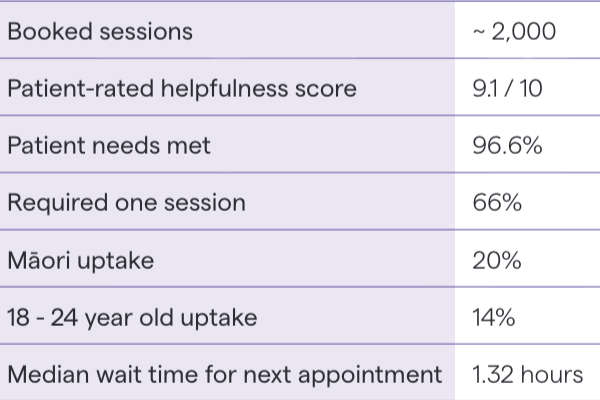
The usual in-person HIP approach has been enhanced with Tend's online video technology, dedicated customer support teams, and real-time data and metrics to support clinical governance. Since launch, the service has recorded close to 2,000 booked appointments, demonstrating growing demand for a low-barrier national mental health pathway.
" The accessibility and responsiveness of the HIP approach is proving to be highly valuable - not only for patients but also for my primary care colleagues, who benefit from having rapid, practical mental health support integrated into their teams. "
While the number of appointments is lower than our original forecast, that forecast assumed a higher proportion of people would need multiple visits. What we are actually seeing is very positive for an early intervention model: around two-thirds of patients are getting the support, guidance and next steps they need in a single appointment, and our patient experience and intervention metrics are very strong. That tells us the service is reaching the right people, at the right time, in a way that is genuinely helping.
These early results are encouraging, particularly when measured against our core objectives of helpfulness and accessibility. To date, we have achieved an average patient-rated helpfulness score of 9.1/10, with 96.6% of patients reporting that their specific needs were met. From an accessibility perspective, the next available appointment has always been within the same day (median time to next available appointment is 1.32 hours).
Expanding reach and access
In recent months, as the service has moved into the scale-up phase, we have increased our focus on reaching underserved communities - students and tertiary providers, rainbow communities and rural sector workers. Almost one in five patients identifies as Māori, and 14% are aged 18-24, suggesting the service is reaching priority groups who often face greater barriers to timely mental health care. We are also beginning to collect wellbeing outcome data through the WHO-5 measure. Early results show the service is predominantly reaching people with mild to moderate wellbeing concerns, which is the intended cohort for this model of care.
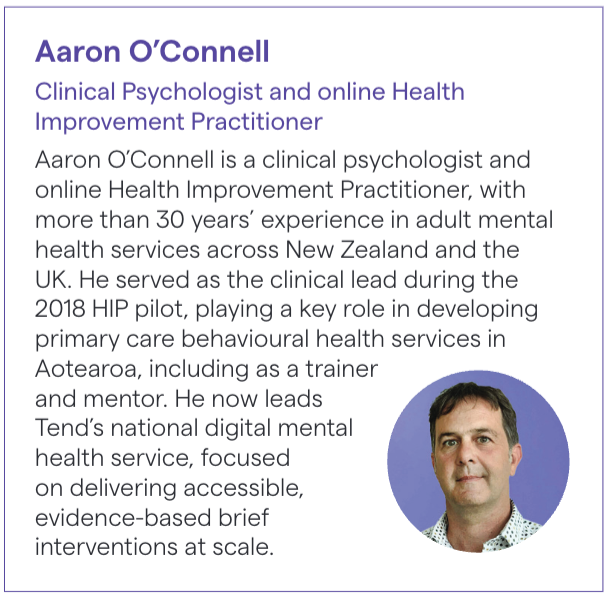
The service is drawing patients from across New Zealand, including both enrolled and non-enrolled patients, reinforcing the value of a national digital access pathway. The team currently includes five Health Improvement Practitioners and myself. Every patient receives a succinct summary and behavioural change plan minutes after the consultation, and a full set of clinical notes is provided to their GP via the usual clinical channels. Where additional support is needed, our team provides recommendations and liaises with the person's own GP and in-clinic HIP, or refers on to other services, including stepping up to specialist mental health care when required.
What the results have taught me
Reflecting on those early doubts, I now see this as an incredibly rewarding way of working. I'm impressed by how New Zealand has adopted high-fidelity clinical approaches, like Focused Acceptance and Commitment Therapy (FACT), to deliver such effective, outcomes-focused interventions. The integration of new technology has been a genuine shift, significantly reducing the administrative burden on clinicians and improving patient reach. Using a telehealth platform explicitly designed to simplify primary care workflows allows us to focus less on paperwork and more on the people we serve. By weaving these digital tools directly into our daily processes, we are finally increasing access to care across the wider population.
My initial concerns about a lack of depth have been answered by the tangible results I see every day. I am so proud of the impact we are making, driven by a team that is genuinely kind and focused on improving the wellbeing of our communities. We have finally found a way to balance clinical sophistication with a model that actually meets the scale of the need.
Funded online HIP consults